
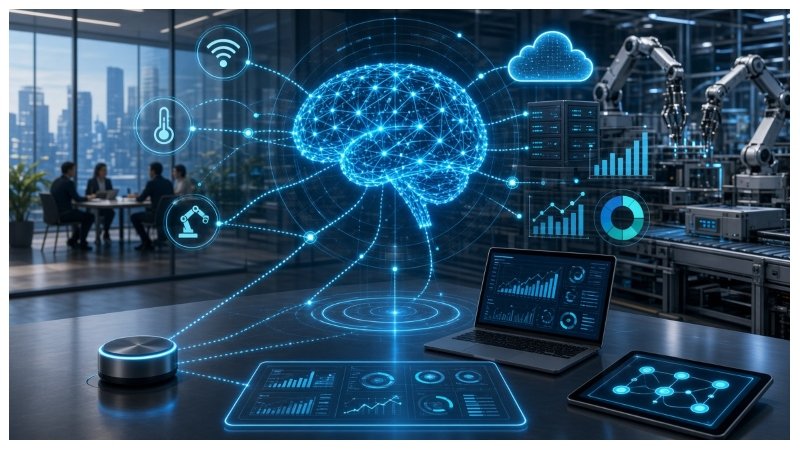
Most businesses today use digital tools, but these tools often operate in isolation. Data remains siloed, decisions are delayed, and overall efficiency suffers.
Digital Infusing Aggr8Tech is a concept that aims to solve this problem. It is not simply about adding new software. Instead, it focuses on deeply embedding technologies such as artificial intelligence (AI), the Internet of Things (IoT), cloud computing, data analytics, and automation into existing business processes so that the entire system functions as one connected, intelligent engine.
Important note: Extensive online research shows that “Aggr8Tech” and “Digital Infusing Aggr8Tech” appear mainly in SEO-style blog posts and content-farm articles. There is no clear evidence of an official company website, LinkedIn presence, Crunchbase listing, or coverage by major media outlets. It should therefore be understood as an emerging methodology or buzzword rather than a verified, established company.
What is Digital Infusing Aggr8Tech?
- Digital Infusion: Embedding digital technology deeply into every layer of operations, customer service, and decision-making, rather than treating it as a surface-level add-on.
- Aggr8Tech (Aggregate Tech): Combining multiple advanced technologies into a single cohesive system.
Traditional digital transformation often focuses on adopting new tools. Digital infusion emphasizes integration, real-time data flow, and continuous improvement.
Core Technologies Involved
| Technology | Role | Key Benefit |
|---|---|---|
| Artificial Intelligence & Automation | Predictive analytics, chatbots, process automation | Faster decisions, reduced manual work |
| Internet of Things (IoT) | Real-time data from sensors | Live monitoring of operations |
| Cloud Computing | Scalable storage and processing | Instant scaling without new hardware |
| Data Analytics | Live dashboards and insights | Data-driven decisions instead of gut feeling |
| Blockchain (in some cases) | Secure and transparent data sharing | Improved trust in supply chains |
Key Benefits (Based on Available Descriptions)
- Real-Time Decision Making
Live data replaces outdated reports, allowing businesses to prevent problems rather than only react to them. - Operational Efficiency
Connected systems eliminate silos between CRM, inventory, logistics, and customer service. Some promotional examples claim 30–45% cost savings and productivity gains. - Scalability and Agility
Cloud-based architecture makes it easier for businesses to grow without major system overhauls. - Improved Customer Experience
Personalized and proactive service through AI chatbots and real-time tracking. - Sustainability (especially in agriculture)
Precision farming techniques can reduce water and chemical use while improving yields. Broader agritech reports often cite 20–30% yield improvements from digital platforms.
Industry Applications
- Logistics & Supply Chain: Real-time tracking and reduced delays.
- Agriculture: Optimized irrigation, fertilization, and pest control using sensors and analytics.
- Retail & E-commerce: Better inventory and customer data integration.
- General Enterprises: Workflow automation and a stronger data-driven culture.
Traditional Digital Transformation vs. Digital Infusing
| Aspect | Traditional Digital Transformation | Digital Infusing Aggr8Tech Approach |
|---|---|---|
| Approach | Adding new tools | Deeply embedding technology into existing processes |
| Focus | Technology upgrades | Integration + cultural change |
| Data | Often delayed or siloed | Live and connected |
| Outcome | Short-term improvements | Long-term adaptability and resilience |
Practical Implementation Steps
- Assess current systems and identify major pain points.
- Start with a small pilot project (for example, automating one process).
- Connect systems using APIs and integration layers.
- Train employees on both the technology and the process changes.
- Continuously measure results and refine the approach.
Conclusion
Digital Infusing Aggr8Tech presents an interesting idea: shifting from simply installing tools to creating intelligent, connected systems. This approach can be valuable for businesses struggling with data silos and slow decision-making.
However, anyone considering it should carefully verify claims. Independent case studies, vendor credentials, and real-world results are essential, as most available information currently comes from promotional or SEO-driven content rather than verified sources.
If you would like a more detailed version focused on a specific industry (such as agriculture, logistics, or retail) or a practical implementation roadmap, just let me know.