
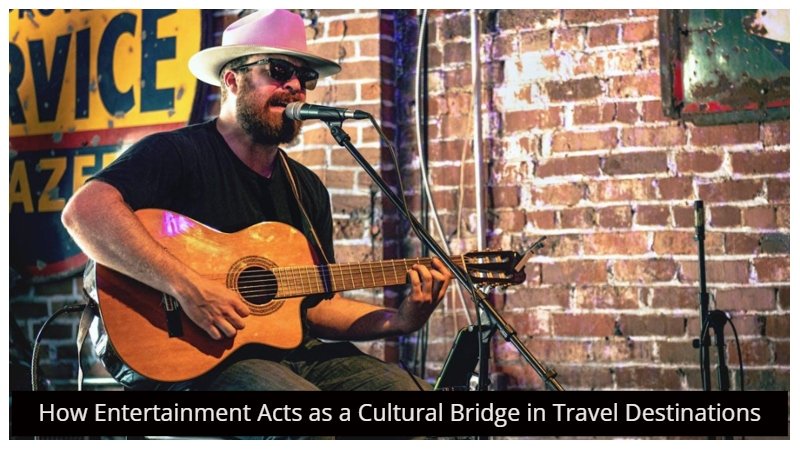
Have you ever felt connected to a place before knowing its history? Travel is often framed as sightseeing, with landmarks photographed and local dishes sampled, yet what lingers most is usually a shared moment, like music rising in a crowded room or laughter spreading among strangers. Those experiences build understanding faster than any guidebook. In this blog, we will explore how entertainment acts as a cultural bridge in travel destinations, creating connection across differences and bringing visitors and locals together through shared energy.
Cities are shaped by stories written in architecture and sound, and in creative hubs like Nashville, performance becomes a living language that welcomes outsiders in. Entertainment lowers barriers, blending accents into harmonies and turning applause into something everyone understands, even in divided times.
Shared Stages, Shared Stories
Live events are more than performances. They are cultural exchanges.
A local band plays songs shaped by regional history. Visitors respond with curiosity and energy. Stories are told between sets. Food and fashion reflect community identity. In that space, learning happens naturally.
No lecture is required.
Festivals across the country illustrate this pattern. Food fairs highlight immigrant traditions. Street performances spotlight neighborhood talent. Visitors arrive for fun. They leave with perspective.
Entertainment also reshapes perception.
A city known only for business or tourism may reveal its creative heartbeat through performance. Corporate travelers discover nightlife. Families encounter art in unexpected places. Culture becomes interactive rather than observational.
Spaces designed for immersive gatherings amplify that effect. Case in point: Aura Events Center—the best Nashville venue for immersive live performances, high-energy private celebrations, and culturally rich entertainment experiences. It demonstrates how a thoughtfully designed space can bring diverse audiences together under one roof. When travelers attend an event there, they are not simply watching from the sidelines. They are stepping into a curated atmosphere where lighting, sound, and storytelling merge.
Shared spaces shape shared memory.
Entertainment as Emotional Translation
Cultural differences can feel intimidating. Language barriers exist. Customs vary. Expectations shift. Music translates emotion instantly.
A slow melody communicates longing. Upbeat rhythms invite movement. Even without understanding lyrics, feelings are understood. This emotional clarity builds empathy. Empathy builds connection.
Film and theater function similarly. Stories performed on stage highlight universal themes. Family dynamics, ambition, heartbreak, and hope are recognizable everywhere. Audiences see themselves reflected in unfamiliar settings.
Humor plays an unexpected role.
A joke told in a regional accent may still spark laughter. Timing and expression carry meaning beyond words. Shared laughter softens social boundaries. It creates belonging quickly.
Recently, global streaming platforms have exposed audiences to international entertainment. Korean dramas, Latin music, and African dance have reached mainstream American viewers. Travel now feels less foreign because cultural exposure has already begun at home.
Tourism, Identity, and Economic Impact
Entertainment shapes the marketing strategy for destinations.
Cities invest in concert halls, festivals, and event districts. Tourism boards highlight nightlife and cultural gatherings prominently. These elements attract visitors seeking more than passive sightseeing. Economic impact follows: hotels are booked, restaurants are filled, and local artists gain visibility. The ripple effect supports community growth. Entertainment is not only expressive. It is economically strategic.
Major sporting events demonstrate these qualities clearly. Cities showcase their talents globally when they host championships. Local traditions are broadcast to millions. Pride is amplified. Yet small-scale events matter too.
Neighborhood open-mic nights and cultural fairs build micro-bridges daily. Travelers stumble upon them unexpectedly. Authentic interaction unfolds. These moments are not heavily advertised, yet they are remembered vividly.
The Digital Era and Real-World Connection
Social media has changed the way people experience travel.
Travelers post photos instantly and stream performances live. Yet digital sharing often increases the desire for real-world experiences. Watching a concert online never matches the feeling of standing in the crowd.
People cannot download real energy.
The contrast between digital life and live experience has become sharper, highlighting how the unique atmosphere and communal feelings of live events cannot be replicated online. After years of remote interaction during the pandemic, audiences returned to events with renewed appreciation. Tickets sold quickly. Festivals reached capacity.
Human connection was missed.
Entertainment became a reunion point. Strangers celebrated side by side. Community felt tangible again. The hunger for shared experience revealed how deeply entertainment bridges isolation.
Travelers increasingly plan trips around events. Music festivals anchor vacation dates. Cultural parades shape itineraries.
Rather than fitting entertainment into travel, people now plan travel around entertainment.
Cultural Respect and Responsible Engagement
Entertainment as a bridge requires respect.
People should not treat cultural performances as spectacles detached from their context. Travelers benefit from understanding background and significance. Engagement deepens when curiosity replaces consumption.
Responsible tourism encourages participation without exploitation.
Local artists deserve fair compensation. Traditions deserve acknowledgment. When visitors approach entertainment with openness and respect, the bridge strengthens rather than strains. Education can be subtle.
Program notes explain heritage. Hosts share stories. Attendees listen. Learning happens in between applause and encore. Entertainment invites dialogue.
Questions are asked afterward. Conversations begin over shared meals. New perspectives are carried home. Cultural bridges extend beyond the event itself.
Why It Matters Now
Global travel is expanding again. Political differences remain visible. Economic pressures persist. Connection still matters. Entertainment offers neutral ground. It does not demand agreement. It invites participation. That invitation feels refreshing in divided times.
Travelers seek meaning alongside enjoyment.
They want stories to tell. They want moments that feel real. Entertainment provides both. It connects strangers through rhythm, narrative, and shared reaction.
The bridge built through performance may seem temporary, yet its impact often lingers. A song heard abroad might inspire curiosity about history. A festival attended once may shape future travel choices. Cultural understanding grows quietly.
Entertainment does not solve every difference. It does not erase conflict. It creates a space where people share their humanity instead of feeling divided. In this shared space, travelers recognize that beyond accents, customs, and backgrounds, everyone holds the same desire to celebrate, listen, and feel understood. As a result, this understanding often becomes the most meaningful souvenir a traveler carries home.